
The Strategic Guide to Event Sustainability Through Verified Tree Planting
Every ticket sold represents more than a transaction—it's an opportunity to create lasting environmental impact. As the global events industry approaches $1.4 trillion in annual value, event organizers face mounting pressure to address their environmental footprint while meeting the expectations of increasingly eco-conscious attendees. The solution lies not in reduction alone, but in transformation: turning each event into a catalyst for positive environmental change.
The numbers tell a compelling story. A single 1,000-person, three-day event generates approximately 530 metric tons of CO2 emissions—equivalent to consuming more than 1,233 barrels of oil. Yet simultaneously, 81% of event attendees are willing to pay higher ticket prices for events that demonstrate genuine sustainability commitments. This convergence of environmental necessity and consumer demand creates unprecedented opportunity for event organizers who approach sustainability strategically.
The Environmental Reality of Modern Events
Understanding your event's carbon footprint is the essential first step toward transformation. Research consistently shows that attendee travel accounts for 90% of an event's total emissions, dwarfing the carbon impact of venues, catering, and production combined. For international conferences, the average participant produces between 500 and 1,500 kg CO2e per conference round-trip, with total conference emissions often exceeding 2,000 tonnes of greenhouse gases.
The remaining 10% represents the operational footprint: venue energy consumption, food production and waste, materials and production, accommodation, and ground transportation. Each element contributes to an environmental legacy that extends far beyond the final curtain call. A study analyzing music festivals found that 80% of Coachella's carbon emissions stem from attendee travel alone, while Glastonbury generates 2,000 tons of waste in a single weekend.
These figures aren't arguments against events—they're calls to action. The event industry, valued at $1,406 billion in 2024, is projected to grow at a 5.1% compound annual growth rate through 2034. This growth trajectory makes environmental stewardship not just ethical but economically essential.
The Shift from Reduction to Regeneration
Progressive event organizers are moving beyond simple carbon reduction to embrace regenerative approaches that create net-positive environmental outcomes. This shift reflects deeper changes in consumer expectations and industry standards. According to recent industry research, 65% of event professionals now recognize sustainability as a key factor in audience engagement, while 85% of consumers prefer to buy from brands demonstrating environmental responsibility.
The data reveals that sustainability concerns aren't peripheral to attendee decision-making. Survey findings indicate that 18% of attendees identify sustainable practices as their top priority when deciding whether to attend an in-person event, and 42% of attendees consider sustainability practices a major factor influencing their attendance decisions. These aren't marginal preferences—they're mainstream expectations.
Moreover, 44% of event attendees are more likely to return to events that demonstrate environmental responsibility. This creates a powerful business case: sustainable events don't just reduce environmental harm—they build loyalty, enhance brand reputation, and drive repeat attendance.
Tree Planting as Event Legacy Infrastructure
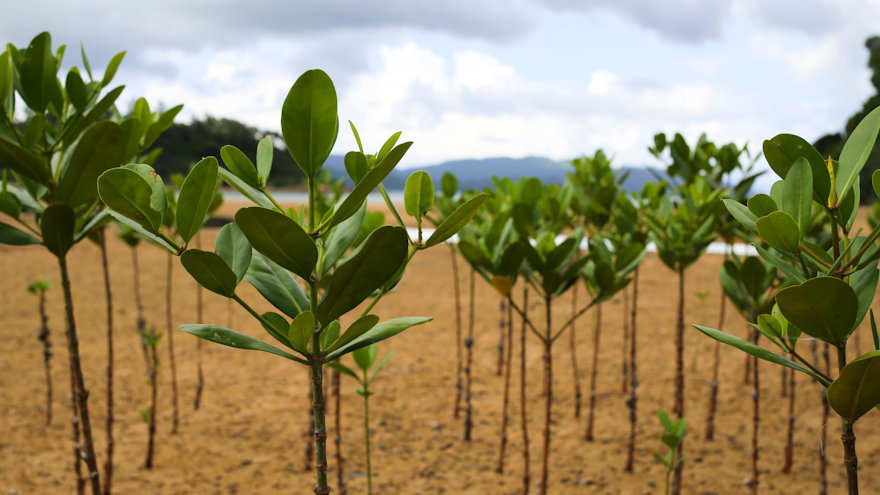
Tree planting programs offer event organizers a tangible, verifiable method for creating lasting environmental impact from ticket sales. Unlike abstract carbon offsetting, trees provide visible, trackable evidence of environmental contribution that resonates deeply with modern attendees seeking authentic sustainability commitments.
The environmental value extends far beyond carbon sequestration. Research from NASA and other institutions confirms that well-designed reforestation projects deliver multiple benefits: biodiversity restoration, watershed protection, soil stabilization, local economic development, and urban heat island mitigation. A mature forest ecosystem provides services that compound over decades, creating environmental value that far exceeds the initial investment.
The carbon mathematics are straightforward but powerful. A hectare of trees holds approximately 50 tons of carbon, equivalent to around 180 tons of CO2 removed from the atmosphere. When event organizers commit to planting a tree for every ticket sold—or every ten tickets, or every attendee—they create a direct connection between event participation and environmental regeneration.
Critical to success is verification and permanence. The voluntary carbon market reached $2 billion in 2021 and could hit $100 billion by 2030, but this growth brings heightened scrutiny around project quality and verification. Recent studies highlighting failures in some carbon offset programs underscore the importance of partnering with platforms that provide transparent tracking, native species selection, and long-term monitoring.
Implementing Tree Planting Programs: A Strategic Framework
Successful tree planting initiatives require more than good intentions. They demand systematic planning, transparent measurement, and authentic communication. Here's how leading event organizers are building programs that deliver genuine impact:
Calculate Your Baseline
Begin with accurate carbon footprint assessment. Tools aligned with GHG Protocol standards can calculate emissions across all event activities—from venue energy use to attendee travel to waste generation. Modern event carbon calculators, such as those developed by organizations like SkootEco and One Tribe, make this process accessible, often requiring less than five minutes to generate comprehensive emissions reports.
Understanding your baseline enables informed decision-making about offset ratios. Some organizers commit to planting one tree per ticket sold. Others calculate total event emissions and plant sufficient trees to offset a meaningful percentage—recognizing that a single tree typically sequesters 20-30 kg of CO2 annually as it matures.
Choose Verified Partners
Platform selection determines program credibility. Look for partners offering individual tree tracking, GPS verification, native species selection, long-term survival monitoring, and transparent reporting aligned with recognized standards. OneSeed's comprehensive tracking technology exemplifies this approach, providing granular visibility into every tree planted, including species information, planting location, and projected carbon sequestration over time.
Avoid partnerships that make unrealistic claims or lack transparent verification. The collapse of certain carbon offset schemes—including Australia's human-induced regeneration program, which showed limited evidence of actual forest regeneration despite credited claims—demonstrates the critical importance of rigorous verification standards.
Integrate Throughout the Attendee Journey
Tree planting creates maximum impact when woven throughout the event experience, not treated as an afterthought. Consider these integration points:
Registration and ticketing: Communicate your tree planting commitment during ticket purchase, showing attendees the direct environmental impact of their participation. Platforms like Ticket Tailor demonstrate this approach effectively—their "Penny for the Planet" initiative raised over £180,000 in 2024 through small per-ticket contributions to environmental causes.
Pre-event communications: Share details about your reforestation partners, tree species being planted, and project locations. Transparency builds trust and demonstrates authentic commitment beyond marketing claims.
On-site activation: Create physical or digital experiences that connect attendees to their environmental impact. QR codes linking to tree profiles, live planting counters, or virtual forest tours transform abstract commitments into tangible experiences.
Post-event engagement: Provide attendees with certificates, tree tracking links, or ongoing updates about their forest's growth. This extends the event experience beyond the venue, creating lasting connections and encouraging repeat participation.
Measure, Report, and Iterate
Sustainability programs succeed through continuous improvement. Track key metrics: total trees planted, estimated carbon sequestered, attendee engagement with sustainability initiatives, and cost per tree relative to total event budget. Recent industry data shows that 45% of events now actively measure their carbon footprint to improve sustainability strategies.
Transparent reporting builds credibility. Share your sustainability metrics publicly—total emissions, offset percentage, trees planted, and environmental impact projections. The ISO 20121:2024 standard for event sustainability management provides a framework for systematic approaches to measuring and managing environmental impact across all event types.
Beyond Carbon: The Holistic Value of Tree-Based Legacies
While carbon sequestration provides the foundational rationale for tree planting programs, the benefits extend significantly further. Reforestation projects create employment in vulnerable communities, restore degraded ecosystems, protect watersheds, improve air quality in urban areas, and preserve biodiversity.
These co-benefits align with broader sustainability frameworks increasingly demanded by corporate sponsors and stakeholders. 47% of events teams are actively focused on reducing environmental impact, while 55% aim to make their events more inclusive and accessible. Tree planting programs that prioritize community benefit alongside environmental impact satisfy multiple stakeholder expectations simultaneously.
For corporate events particularly, tree planting creates narrative opportunities that extend beyond the event itself. Microsoft's recent commitment to purchase 3.5 million carbon credits through Brazilian reforestation—a $200 million investment over 25 years—demonstrates how major organizations are using verified tree planting as part of comprehensive climate strategies.
Overcoming Implementation Challenges
Event organizers considering tree planting programs often encounter predictable obstacles. Budget constraints top the list, yet the economics often prove more favorable than expected. Tree planting costs typically range from $1 to $3 per tree when partnering with established platforms, making even ambitious programs achievable. For a 1,000-attendee conference, a commitment to plant one tree per attendee adds $1,000-$3,000 to the event budget—often less than 1% of total costs.
This investment yields substantial returns in attendee satisfaction, sponsor appeal, and brand differentiation. The same research showing 81% of attendees will pay more for sustainable events suggests that modest ticket price increases—transparently communicated as supporting environmental initiatives—face minimal resistance.
Verification concerns require careful partner selection but are entirely manageable with proper due diligence. Look for platforms using internationally recognized methodologies, providing individual tree tracking through GPS and photographic evidence, partnering with established NGOs, and offering transparent reporting aligned with standards like the Verified Carbon Standard or Gold Standard.
Communication challenges arise when organizations fear accusations of greenwashing. The solution lies in transparency and proportionality. Don't claim carbon neutrality unless you're offsetting 100% of measured emissions through verified projects. Instead, communicate what you're actually doing: "We're planting 1,000 trees to partially offset our event's carbon footprint" proves more credible than vague claims of "going green."
The Regulatory and Competitive Landscape
Event sustainability is shifting from optional enhancement to industry standard. While almost 50% of events still lack sustainability requirements, this represents a rapidly closing window of competitive differentiation. Organizations implementing robust environmental programs now position themselves advantageously as regulations tighten and stakeholder expectations continue rising.
The regulatory environment increasingly favors measured, verified environmental action. While the United States lacks federal event sustainability mandates, states and municipalities are implementing their own requirements. European venues face stricter oversight, with the EU's broader sustainability reporting directives creating pressure throughout the events value chain.
Competitive dynamics reinforce these trends. As leading festivals, conferences, and corporate events showcase sophisticated sustainability programs, attendee and sponsor expectations rise accordingly. Industry observers note that companies embracing sustainability shifts gain significant competitive advantages, attracting eco-conscious attendees and sponsors while building stronger brand reputations.
Case Study: Scaling Impact Through Systematic Integration
The trans-o-flex logistics company provides an instructive example of tree planting program implementation. Partnering with Click A Tree, they planted two trees for each customer survey response—transforming feedback collection into environmental action. Over time, this initiative generated over 2,600 trees while simultaneously improving customer engagement and providing valuable business insights.
The program's success stemmed from strategic integration: tree planting wasn't ancillary to business operations but embedded within them. Every customer interaction created environmental value, building brand loyalty while demonstrating authentic commitment to sustainability.
For event organizers, the lesson is clear: tree planting programs work best when integrated systematically rather than bolted on as afterthoughts. When attendees understand that their participation directly contributes to reforestation, the psychological connection strengthens both satisfaction and environmental impact.
Building Your Event's Environmental Legacy
The transformation from traditional event execution to environmental legacy creation requires intentionality but not complexity. Start with these concrete steps:
Assess your current footprint: Use established calculators to understand your event's carbon emissions across all sources. This baseline enables meaningful goal-setting and progress tracking.
Set realistic but ambitious targets: Commit to planting a specific number of trees per ticket sold or per attendee. Communicate this commitment clearly during ticket sales and throughout the event experience.
Partner with verified platforms: Select tree planting partners offering transparent tracking, native species focus, community benefits, and long-term monitoring. Avoid programs making unrealistic claims or lacking credible verification.
Integrate throughout the attendee journey: Make tree planting visible and meaningful at every touchpoint—from registration through post-event follow-up. Create opportunities for attendees to track their individual impact.
Measure, communicate, and improve: Track program metrics rigorously. Report results transparently. Use learnings to refine and enhance your approach for future events.
The most successful programs recognize that environmental legacy isn't separate from event success—it's integral to it. In an industry where 69% of attendees feel more positive about events enabling connection with nature, environmental initiatives directly enhance the core event value proposition.
The Future of Event Environmental Stewardship
As we look toward 2025 and beyond, several trends will shape event sustainability. Virtual and hybrid formats, which can reduce carbon emissions by 20-50% compared to fully in-person events, will continue evolving—but in-person gatherings will remain central to the industry. The challenge lies in making these essential human connections as environmentally responsible as possible.
Technology will play an increasing role in verification and engagement. Blockchain-based tracking systems, AI-driven carbon calculators, and immersive virtual forest experiences will make environmental impact more tangible and verifiable. Event organizers who embrace these tools early will establish credibility and differentiation.
Regulatory pressure will intensify. While current compliance requirements remain limited in many jurisdictions, the trajectory points clearly toward mandatory sustainability reporting and verified environmental action. Organizations building robust programs now will navigate future regulations more easily while capturing first-mover advantages.
Most significantly, stakeholder expectations will continue rising. The current generation of event attendees—particularly Millennials and Gen Z—demonstrate unprecedented environmental consciousness. Their expectations will define industry standards going forward. Events that fail to meet these expectations risk irrelevance, while those exceeding them will thrive.
Conclusion: From Transactions to Transformation
Every ticket sold represents a choice: maintain the status quo or create lasting environmental value. The evidence demonstrates overwhelmingly that attendees, sponsors, and stakeholders prefer the latter. They're willing to pay more, engage more deeply, and return more reliably to events that demonstrate authentic environmental commitment.
Tree planting programs offer a proven pathway to transformation. When implemented strategically—with verified partners, transparent measurement, and systematic integration throughout the attendee journey—they create environmental legacies that extend decades beyond any single event. They turn carbon liabilities into regeneration assets, transforming necessary gatherings into catalysts for positive change.
The global events industry generates approximately 1.5 billion tons of CO2 annually. This represents both an immense challenge and an extraordinary opportunity. By converting even a fraction of that impact into verified reforestation, event organizers can contribute meaningfully to climate mitigation while building stronger, more valued brands.
The question isn't whether to embrace environmental stewardship—it's how quickly and comprehensively to implement it. The organizations answering that question with urgency and authenticity will define the future of an industry increasingly inseparable from its environmental impact.
Your next event's environmental legacy begins with a simple decision: plant trees, track impact, engage attendees, and build programs that create value lasting far beyond closing night. The attendees willing to pay more for sustainability are waiting. The technology for verified impact exists. The only remaining variable is commitment.
Ready to transform your event ticket sales into lasting environmental impact? OneSeed provides verified tree planting solutions with comprehensive tracking, native species selection, and transparent reporting to help event organizers build authentic sustainability programs that resonate with modern attendees.