
Most travel businesses approach sustainability as a communications challenge. They invest in a certification, write a page for their website, and include a paragraph in their booking confirmation. The environmental commitment is real, but the guest never quite feels it.
The businesses getting genuine traction with today's traveler are doing something different. They're building environmental action into the mechanics of how they operate, embedding it into a specific moment in the customer relationship — a booking, a newsletter signup, a monthly energy report — so that the impact is tangible and the story tells itself.
Three OneSeed partners in the travel and hospitality space have each found their own answer to that challenge. They operate in different ways, in different parts of the market, with different customers. But the design principle behind each of them is the same: attach a real environmental action to a real customer moment, and let the result speak for itself.
Here's what they're doing, and what it suggests for travel businesses thinking about the same question.
The market these businesses are building into
Before looking at the examples, it helps to understand the scale of the opportunity they're responding to.
The global sustainable tourism market is projected to grow from $3.56 trillion in 2025 to more than $11 trillion by 2034. The term "sustainable travel" has seen a 108% increase in global searches over the past two years, and sustainable travel is important to 83% of global travelers. In the hotel sector specifically, 88% of travelers factor sustainability into their hotel booking decisions, yet the same research shows that most guests don't trust that hotels actually follow through on their environmental commitments.
That gap, between stated traveler values and felt experience, is where the business opportunity lives. And it's where all three of these partners are working.
SensorFlow: trees as recognition for performance already happening
SensorFlow is a Singapore-based proptech company that deploys AI-powered IoT sensor technology across hotel properties globally, with its current main market in Southeast Asia. Their system monitors energy consumption in real time, detecting room occupancy, automating HVAC settings when rooms are empty, and giving hotel operators granular visibility into exactly where energy is being used and wasted.
Hotels can save up to 20 to 40% in energy costs through SensorFlow's platform. The IoT devices can be installed in hotel guest rooms in under 10 minutes, seamlessly upgrading operations without disruption. The commercial model is straightforward: SensorFlow operates on a pay-as-you-save basis, meaning hotels pay nothing upfront and share a percentage of the savings they achieve.
The OneSeed integration adds a layer that transforms the energy management story into a guest-facing environmental narrative. Every hotel property demonstrating responsible energy usage for the month receives trees planted in its name, through OneSeed, with no separate process, budget, or campaign required.
What makes this model worth studying is what triggers it. The trees aren't purchased as an offset or attached to a marketing initiative. They're earned, by verified performance against a measurable environmental target. The hotel was already working toward energy efficiency for cost reasons. SensorFlow was already tracking efficiency outcomes. OneSeed turns that existing data point into an environmental impact story.
For hotel operators, this matters in several ways at once. It creates a shareable, verifiable monthly record of environmental action that builds cumulatively across SensorFlow's portfolio. It gives sustainability leads something concrete to point to in ESG reporting. And it gives individual properties a story to tell guests that is grounded in measurement rather than aspiration; "this month, our energy efficiency earned us X trees planted in Y project."
The implication for other hospitality businesses: the trigger doesn't have to be a transaction. If you're already tracking behavior that reflects environmental responsibility — energy use, water consumption, waste reduction, linen reuse rates — that data can become the basis for a tree-planting program that rewards performance and generates a verifiable impact record at the same time.
Asia Sustainable Travel: trees at the moment of welcome
Asia Sustainable Travel, co-founded by Rhea Vitto Tabora and Jeremy Tran, exists to serve sustainability-led travel and hospitality professionals across Asia. Their newsletter delivers agenda-setting analysis and practical guidance to executives, entrepreneurs, and operators navigating the sustainability transition in one of the world's fastest-growing travel markets.
Asia Pacific is slated to grow at the fastest rate globally during 2025-2032 in the ecotourism market. The audience AST is building, senior professionals in Asian travel and hospitality who are actively trying to lead that transition, is precisely the group most likely to act on what they read, share what resonates, and remember who helped them think clearly at a consequential moment in their careers.
The OneSeed integration is simple and well-placed. Every new subscriber to the AST newsletter receives a tree planted in their name, as part of their welcome. As AST put it on their own resources page: "We plant a tree to welcome every new subscriber through our partnership with OneSeed. So go on and join us. We'll grow a forest together."
That framing, we'll grow a forest together, turns a transactional signup into something that feels more like joining a community with shared stakes in an outcome. The new subscriber doesn't just receive a newsletter. They become part of something cumulative.
The newsletter signup trigger is underused in travel and hospitality. Most businesses think of tree planting as attached to purchases: a booking, a transaction, a checkout. But the moment someone subscribes to a newsletter is often the highest-intention moment in the customer relationship — they've actively sought you out, they've shared their contact details, they want to hear from you. Attaching an environmental action to that moment signals, immediately and concretely, what kind of business they've just decided to follow.
For travel businesses building knowledge products, media, or community platforms alongside their core service, and there are more of these than ever, the welcome tree is a low-friction, high-impact way to make the brand's values felt from the very first interaction.
My Green Islands: the tree that starts the journey
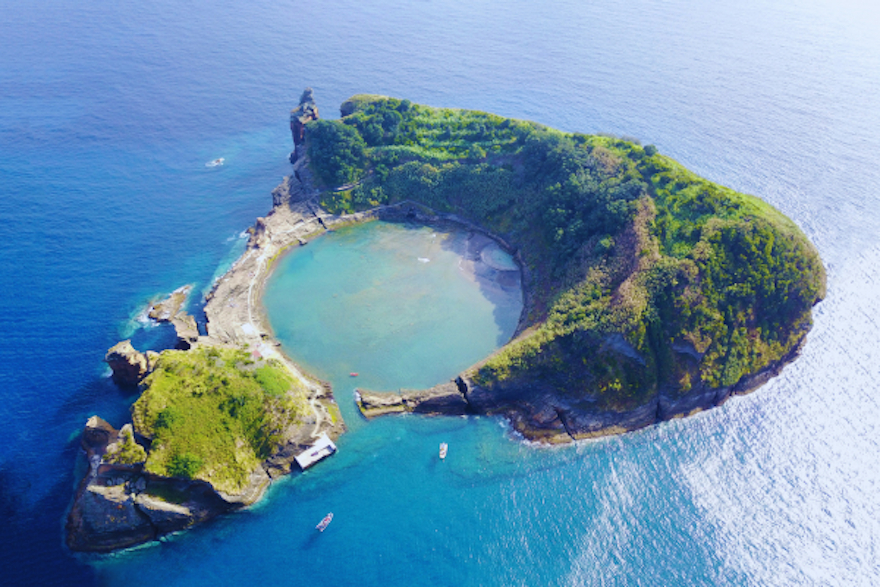
My Green Islands, led by Daniela Jerónimo of Zustain, curates slow-travel experiences to some of the world's most ecologically significant island destinations. Borneo. The Azores. Islands where the natural environment isn't the backdrop, it's the entire reason for going.
The philosophy is deliberate: fewer trips, longer stays, deeper engagement with the place and its people. The "longer stays, fewer trips" logic is emerging not only as an environmental issue but also as a resilience and competitiveness factor, with UN Tourism analyses suggesting that longer stays offer more balanced pressure on destinations while providing more stable economic revenue for local providers.
For every traveler who books with My Green Islands, a tree is planted in their name. That tree is visible on the impact page; showing the project, the species, and the cumulative forest that My Green Islands travelers are building together.
The impact deserves attention as a design choice, not just a feature. My Green Islands travelers are choosing journeys defined by ecological significance; they're going to Borneo because of what Borneo is, to the Azores because of what the Azores represent. The tree planted in their name, visible on a page they can revisit and share, creates a thread between the philosophy of the trip and a concrete, lasting contribution to the natural world they love to experience.
It also gives Daniela a shareable, verifiable story to tell on behalf of each guest, one that doesn't require marketing copy, because the data does the work. A page showing the collective forest built by My Green Islands travelers is both a customer retention tool and a living demonstration of what the business stands for.
84% of travelers say that traveling more sustainably is important to them, and a growing body of research confirms that environmental action, when it's visible and tied to a specific customer moment, translates directly into loyalty and willingness to recommend. My Green Islands' approach is built on that insight from the ground up.
The pattern that connects all three
These are three very different businesses: a Singapore proptech startup operating at hotel-portfolio scale, a media and knowledge platform for travel professionals, and a boutique tour operator curating experiences for the most consciously intentional travelers. Their customers are different. Their triggers are different. Their industries overlap but don't replicate each other.
What they share is a design principle: the environmental action is native to something that was already happening.
SensorFlow hotels were already managing energy. The tree-planting rewards that existing behavior. AST subscribers were already deciding to follow a newsletter. The welcome tree honors that decision. My Green Islands travelers were already choosing a journey defined by environmental values. The planted tree gives that choice a permanent, visible form.
These businesses didn't add a new behavior, launch a new campaign, or build a separate sustainability initiative. They attached meaning to a moment that was already occurring, and turned that moment into evidence of values, automatically, every time.
67% of travelers report that seeing sustainable practices during trips motivates them to be more sustainable at home. The cumulative effect of building these moments into the customer journey consistently, verifiably, at scale, is not just environmental impact. It's a relationship built on demonstrated values rather than stated ones.
What this means for travel businesses thinking about the same question
If you work in travel, hospitality, or tourism and you've been looking for a way to make your environmental commitment felt rather than just communicated, the lesson from these three businesses is that the starting point is simpler than most people assume.
You don't need a sustainability strategy document, a new hire, or a significant budget. You need to identify one moment in your customer relationship that already carries meaning — a booking, a subscription, a check-in, a loyalty milestone, a performance target — and attach a verified environmental action to it.
The moment doesn't have to be large. It has to be real.
Further reading:
Asia Sustainable Travel — analysis and resources for sustainability-led travel and hospitality professionals in Asia
SensorFlow — AI-powered energy management for hotels across Southeast Asia
My Green Islands — curated slow-travel experiences to ecologically significant island destinations; Impact Page: My Green Islands